
Beli
Beli AppFood & Drink
4.2226.00 Reviews
- Version
- 9.14.1
- Installs
- 100.00K
- Age Rating
- Everyone
Screenshots
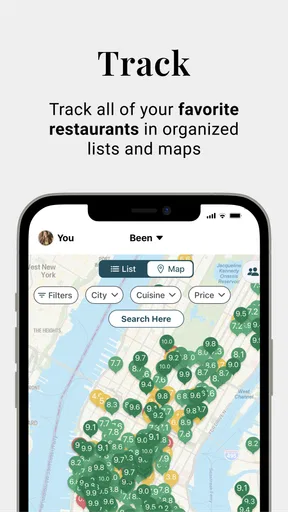
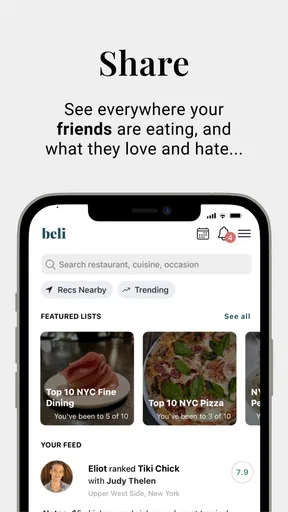
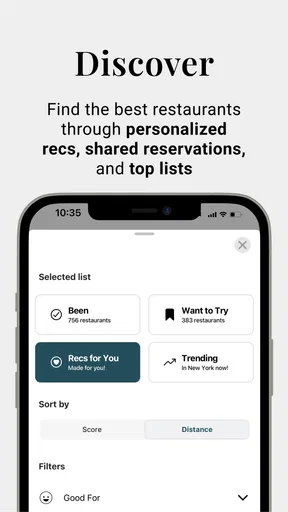
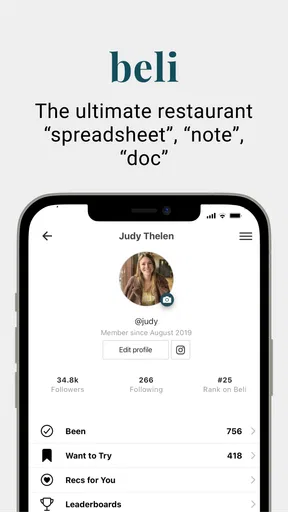
Our Review of Beli
 Analysis by Appyee
I like food apps that help me make a decision instead of giving me another endless wall of restaurants. Beli takes a more personal approach: it is built around keeping track of restaurants I have tried, liked, and want to remember, then turning those choices into a ranked list. That makes it feel closer to a private dining notebook with a social layer than to a standard delivery or map app.
As a free Food & Drink app from Beli App, it is aimed at people who enjoy comparing places and building a reliable shortlist for future meals. The app has a 4.2 average from around 1.8 thousand ratings, with more than 100 thousand installs, so it has found a real audience without feeling like a giant, impersonal directory. It is available for Everyone, and the current version is 9.14.1, with Android 7.0 or later required.
How clearly the restaurant-ranking idea works
The central idea is easy to understand: I can organize restaurants by my own preferences rather than relying entirely on a public star score. That distinction matters. A crowded restaurant with an excellent general reputation may not be right for me, while a quieter neighborhood place can become one of my personal favorites. Beli gives that personal judgment a place to live.
The ranking concept also changes how I think about restaurant discovery. Instead of asking only, “What is nearby?” I can ask, “Which of the places I already trust is best for this occasion?” That is a much more useful question when I am hungry, short on time, or planning dinner with someone whose tastes I know well.
In my experience, the app makes the most sense when I treat it as a growing reference library. The first session may feel less exciting if I do not already have restaurants to add or compare. Its value builds as the list becomes more representative of my real habits. Frequent diners, travelers, and people who save recommendations from friends will get more from it than someone looking only for a one-time takeaway order.
Navigation benefits from that focused purpose. There are fewer competing goals than in a typical restaurant marketplace, where menus, delivery offers, reservations, advertisements, and map results all compete for attention. A focused list can be easier to scan, especially when I already know the kind of place I want.
There is an important trade-off, though. A personal ranking is only as useful as the effort put into maintaining it. If I add restaurants inconsistently or leave old preferences untouched, the list can become less trustworthy. I see Beli as something worth updating after a meal, not an app that can make perfect recommendations without any input from me.
Readable decisions instead of noisy browsing
The strongest readability choice is conceptual rather than visual: the app gives my own priorities more weight than a generic public ranking. That can reduce the mental work involved in choosing. I do not have to remember every restaurant I have visited or scroll through the same search results again when friends ask for a recommendation.
For someone who finds busy interfaces tiring, this narrower purpose may be welcome. A short personal list is easier to process than a large feed filled with unfamiliar venues. It also supports a useful routine: I can review my saved places before leaving home, decide on a few realistic options, and avoid making the final choice while standing outside a restaurant.
Still, clarity depends on how much information I have recorded. If I expect the app to explain every restaurant in detail, a conventional map or review service may be better. Those tools are usually stronger for checking practical information at the moment of search. Beli is more valuable for remembering my own experience and ordering familiar options by preference.
I would also be careful about interpreting a rank as an objective verdict. The list reflects my judgment, not a universal measurement. That is a strength for personal planning, but it can confuse people who want a complete comparison based on price, distance, opening hours, dietary details, or current availability. I use the ranking to narrow the choice, then check practical details elsewhere when the occasion requires it.
What the app asks from different users
People with different levels of technical confidence should be able to understand the basic purpose quickly because the idea is straightforward. The learning curve is less about complicated controls and more about developing a habit: record the places that matter, place them in relation to one another, and return to the list when planning a meal.
That habit may suit users who enjoy organizing personal information. It may be less comfortable for anyone who dislikes rating or ordering restaurants because they prefer to keep food choices spontaneous. In that case, the app can feel like work rather than help. I would not install it expecting it to replace every restaurant search; I would install it if I wanted a dependable memory of my own dining experiences.
A useful workflow is to start with only the restaurants I can confidently compare. I would not try to create a complete history in one sitting. Adding a smaller group of favorites and familiar places makes the first ranking more meaningful and avoids the frustration of making dozens of uncertain decisions at once.
Motor, sensory, and situational use
Restaurant planning often happens in imperfect conditions: on a moving train, while walking, in a noisy street, or when I am already tired and hungry. That context changes what “easy to use” means. A compact personal list is helpful because it can reduce browsing time, but the app still depends on ordinary touch interaction and visual reading. I would judge it as convenient for quick reference, while avoiding claims that it meets any particular accessibility standard.
For users with limited fine-motor control, the most important practical question is whether the ranking and saving workflow feels manageable during real use. If I am trying to make small, precise changes while distracted, any list-based app can become frustrating. My advice is to do detailed organizing at home and use the finished list for quick decisions outside. That separates the demanding task from the urgent one.
Users with low vision or visual fatigue may appreciate having a personal set of restaurants rather than repeatedly scanning a large discovery feed. At the same time, the usefulness of the experience depends on readable text, sufficient contrast, and how comfortably the device can be viewed. Those are areas where individual settings, screen size, and operating-system tools make a meaningful difference, so I would test the app on the device I actually plan to use rather than assuming the experience will be identical for everyone.
For people with hearing-related access needs, the core restaurant-ranking idea is not dependent on audio. That is a positive aspect of the concept: remembering and comparing places is primarily a visual and touch-based activity. I would still distinguish between the core task and any surrounding content that might rely on media or notifications. The app’s main usefulness does not require me to hear a recommendation in order to understand my own list.
Cognitive accessibility is where the personal-ranking model can be especially useful. It reduces a broad decision into a smaller one: which known place fits today? That can help when too many options create stress. I find it easier to choose from a trusted shortlist than from hundreds of unfamiliar results, particularly when I am planning for a group.
There is another side to that simplicity. Ranking restaurants requires personal judgment, and repeated decisions can become tiring for users who prefer clear rules. I would make the process lighter by using practical categories in my own head, such as “quick lunch,” “special dinner,” or “safe choice for visitors,” even if the app’s main structure is the ranking itself. This turns the list into a decision aid instead of a test of perfect consistency.
A realistic day-to-day example
Imagine I am meeting two friends after work. One wants somewhere familiar, another wants to try something better than the usual chain, and I do not have time to read a dozen long reviews. I can open my personal restaurant list, identify the places I already trust, and choose an option that fits the group. If the evening is in an unfamiliar neighborhood, I would then use a map or restaurant service to check distance and current details.
That combination is where Beli works best for me. It handles the memory and preference part of the decision, while a conventional search tool handles live logistics. Trying to force one app to do both jobs can be less efficient. Beli helps me answer “which of my options do I prefer?” It is not necessarily the only tool I need to answer “which of these is open right now and easiest to reach?”
For travel, the same approach can become more valuable over time. I can use the app as a record of places worth revisiting and as a way to keep recommendations from friends from disappearing into a message thread. The trade-off is that the benefit depends on consistent organization. A forgotten list is not much more useful than a forgotten note.
Where it fits beside familiar alternatives
A map app is usually better when location is the main concern. If I need the closest restaurant, directions, opening information, or a broad local search, I would start there. A delivery app is better when the immediate goal is ordering food, comparing delivery options, or tracking an existing order. A public review platform is generally stronger when I know nothing about a restaurant and want a large volume of outside opinions.
Beli occupies a different space. Its advantage is the personal layer: my restaurants, my preferences, and my ranking. That can be more relevant than a crowd average when I am choosing for myself. It is also more useful than a delivery history when I want to remember the quality of an in-person meal, not simply whether food arrived.
I would not recommend replacing every other food app with it. The best setup is complementary. I use Beli to maintain a trusted shortlist, a map service for practical location checks, and a public review source when I need unfamiliar information. That division of labor prevents disappointment and makes the app’s specific strength clearer.
Remaining barriers and points of friction
The biggest barrier is the need for personal input. This is not a passive recommendation feed that becomes useful without participation. I have to remember places, decide how they compare, and keep the list current. For some people, that is exactly the appeal; for others, it is an extra chore added to an already crowded phone.
Personal rankings can also become distorted by context. A restaurant may be excellent for a birthday but unsuitable for a rushed weekday lunch. If I place both experiences in one simple order, the result may hide those differences. I would avoid treating the ranking as permanent truth and instead use it as a starting point for thinking about the occasion.
Another limitation is that personal preference does not automatically cover everyone’s needs. When choosing for friends or family, I may need information about dietary requirements, mobility, noise tolerance, seating, budget, or distance. A personal favorite is not automatically an inclusive recommendation. I would verify those practical details before presenting a restaurant as suitable for someone else.
That point matters for accessibility. The app can help me remember places that worked well for a particular person, but it should not encourage assumptions. A restaurant that was comfortable for one visitor may not suit another, and conditions can change. I would use the list to remember questions and past experiences, then confirm the details that matter for the person joining me.
There is also a social judgment involved in sharing rankings. My order may be useful to a close friend who knows my taste, but less useful to someone with very different preferences. I prefer explaining why I placed a restaurant highly instead of sending a bare ranking and presenting it as universal advice. The app supports personal confidence, not objective authority.
Finally, users who want a full restaurant database may find the focused design limiting. If your priority is menus, delivery, reservations, live availability, or exhaustive public reviews, another category of app will probably serve you better. Beli is a poor fit when the task is purely transactional and a better fit when the task is remembering, comparing, and recommending from experience.
My inclusive verdict
After using it as a personal restaurant organizer, I see Beli as a thoughtful tool for reducing choice overload. Its ranked-list approach is more personal than a standard star rating and more useful than relying on memory alone. I especially like the way it can turn scattered dining experiences into a shortlist I can actually use when making plans.
The experience can support different situations because it reduces the amount of searching needed, works well for visual reference, and does not make the core task dependent on audio. It is also flexible enough to support solo decisions, group planning, travel memories, and recommendations between friends. Those benefits are strongest when I keep the list intentional rather than trying to record everything.
My recommendation comes with clear boundaries. I would choose this free app if I enjoy restaurants, often forget where I have eaten, or want my own preferences to matter more than a crowd score. I would skip it if I want delivery, live logistics, or a complete public directory without having to maintain a personal list.
The best way to begin is modestly: add a few places I know well, use the ranking for a real upcoming meal, and notice whether the process saves time or creates extra effort. If it helps me make decisions faster, the list will naturally earn a place in my routine. If I rarely want to rank restaurants, no amount of browsing will make the concept feel essential.
Overall, Beli succeeds because it treats restaurant discovery as a memory and preference problem, not only a search problem. I would recommend it to a friend who keeps asking, “Where should we eat?” but wants an answer based on personal experience rather than another generic list. Its most important strength is also its main condition: the more thoughtfully I build my own restaurant history, the more useful the app becomes.
Verdict
Strengths of Beli
- Personalized restaurant recommendations based on your taste profile.
- Easy way to save, rate, and organize places you want to try.
- Useful travel discovery features for finding restaurants in new cities.
- Social features let you follow friends and see their dining activity.
- Clean interface makes browsing restaurants quick and enjoyable.
Limitations of Beli
- Some features may require creating an account and sharing personal preferences.
- Recommendations can be limited in areas with fewer active users.
- The app’s value depends on having enough friends or local activity.
- Restaurant details and menus may occasionally be outdated.
- Frequent travelers may find coverage inconsistent outside major destinations.
Similar Picks in This Category
View All
Rappi: Food Delivery, Grocery
Rappi, Inc - Delivery3.5

McDonald’s: Cupons e Delivery
Arcos Dorados4.3

Swiggy: Food Instamart Dineout
Swiggy4.7

Blinkit: Groceries & more
Blinkit4.8

foodpanda: food & groceries
Foodpanda GmbH a subsidiary of Delivery Hero SE4.0

Zomato: Food Delivery & Dining
Zomato4.7
Frequently Asked Questions
What is Beli and what can I use it for?
Beli is a social app designed for discovering, tracking, and sharing restaurants and food experiences. After using it, I found that its main appeal is creating personal lists, rating places, and seeing recommendations from friends or other users. It is useful for keeping a record of restaurants you have visited, planning future meals, and finding new dining options based on your preferences.
How does Beli’s restaurant recommendation system work?
Beli combines your ratings, saved restaurants, lists, and activity with information from people you follow to suggest places you may enjoy. The recommendations become more useful as you add restaurants and rate your experiences. It is not simply a generic directory, because the social aspect allows you to compare tastes with friends and discover restaurants through people whose opinions you trust.
Can I use Beli without sharing my restaurant activity publicly?
Yes, Beli offers privacy and sharing controls that let you decide how much of your activity is visible to other users. You can use the app mainly as a personal restaurant journal, while choosing whether to follow friends, publish lists, or share ratings. Before adding personal information or connecting social accounts, it is still worth reviewing the current privacy settings carefully.
Is Beli free to download and use?
Beli is generally available as a free download, allowing users to create an account, browse restaurant content, save places, and organize their dining history. However, app features, availability, or optional services can change over time depending on the platform and region. Check the Google Play Store or Apple App Store listing for the latest information about in-app purchases, subscriptions, and supported devices.
Is Beli available for both Android and iPhone?
Beli’s availability can depend on the country, operating system version, and current support from the developer. iPhone users should look for the official listing in the Apple App Store, while Android users should check Google Play. Downloading from the official store is recommended because it provides the safest installation, verified updates, and the most accurate compatibility information for your device.
